
Security / Trust
Control the data layer without weakening the security boundary.
LyftData is designed to operate inside enterprise environments where access, transport security, configuration integrity and operational visibility matter.
Architecture
Security starts with where the control layer sits.
Policy is applied upstream, in the layer you control, before data leaves it — not bolted on after the fact at each destination.
Transport
Secure the path between control and execution.
Control plane
served over TLS, configured via CLI flags or environment variables.
Workers
validate certificates by default; disabling that is a controlled, explicit choice for lab scenarios only.
At rest
encrypt disks and backups wherever Server state, staging data and logs are stored — a deployment responsibility, not something applied invisibly.
Access
Give infrastructure access deliberately.
Licensed editions include an OAuth login setting for identity-provider-backed sign-on. Workers authenticate to the Server before participating in deployments.
Change control
Inspect changes before they become production.
In licensed editions, applying a deploy requires a current plan, so you see what it creates, updates and removes, and where it runs, before anything changes. Published workflow versions are immutable, and what runs is tied to a specific version; to roll back, redeploy an older one.
Observability
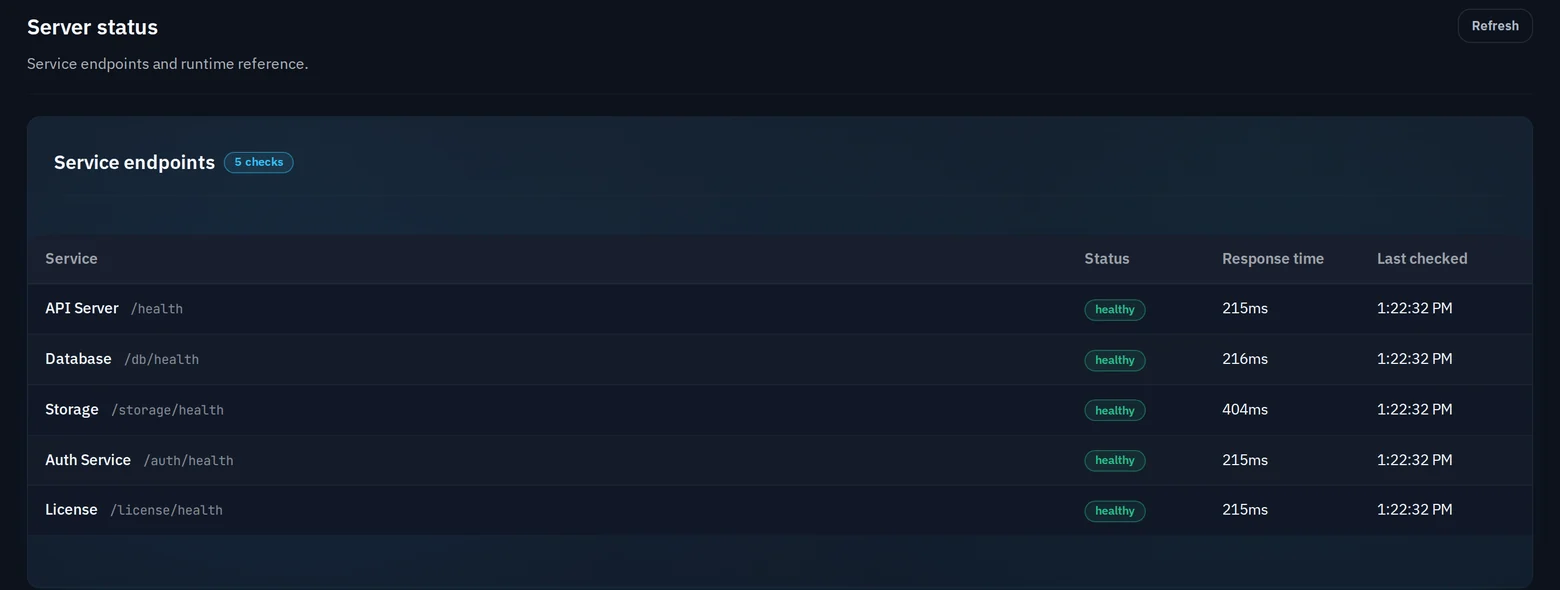
Security controls are more useful when their state is visible.
Data governance
Apply data policy before downstream exposure.
The same Transform stage that filters, parses, normalizes, masks and enriches data is where sensitive fields get handled — before downstream systems ever see them.
Policy belongs upstream, in the layer you control.
Hardening
Security is also how LyftData is deployed.
Network placement, credential rotation and disk encryption remain shared responsibility between your deployment and the platform — the hardening guide covers what to configure on your side.
Evaluating LyftData?
We can support your review.
We can support architecture reviews and security questionnaires with technical documentation relevant to your deployment.
Request security documentationTake control of your data layer.
Start with LyftData, or talk through your security requirements with the team.